I still remember the exact moment this job stopped feeling like “work.” I was reading through a batch of new profiles, the kind I review every week, when I hit one from a man in his fifties. His bio said, almost word for word, “looking for a traditional woman who values family.” Nothing unusual. I’d read a version of that sentence hundreds of times before.
But that day, for whatever reason, I actually stopped and asked myself: what is he really saying?
Because it isn’t really about tradition. Not underneath.
That question changed how I do my job. I test international dating sites for a living, sign-up flows, messaging tools, verification systems, the whole machinery of it. My actual task is to evaluate platforms. But ten years in, what I’ve really been studying is people. And people, it turns out, almost never say what they mean in the first draft.
Reasons Why You Can Trust Us
- Faithfully reviewed over 1000 International online dating and matchmaking services
- Our team has been testing online dating services for over 10 years.
- We guarantee to review and revise the content regularly.
- Contributed in many publications including Notsalmon.com, Marriage.com, or Medium.com.
TOP3 Sites For Russian & Ukraine Dating
The Sentence Under the Sentence
Go through enough profiles and a pattern jumps out. A man wants someone “loyal and family-oriented.” Another says he’s done with games, he wants a woman who’s “serious about marriage.” Women, meanwhile, keep circling back to the same handful of words: stable, mature, someone who knows what he wants.
Take those at face value and you’ll misread almost every one of them.
Here’s what I’ve come to believe those sentences actually translate to, once you strip away the vocabulary of dating profiles:
I want to feel safe.
I want someone to choose me.
I don’t want to waste another five years.
I’m tired of being disappointed.
I’m lonely.
I didn’t arrive at that list from a textbook. I arrived at it from reading thousands of these bios back to back, watching the same five feelings dressed up in a hundred different outfits.
Filters Are Rarely About the Filter
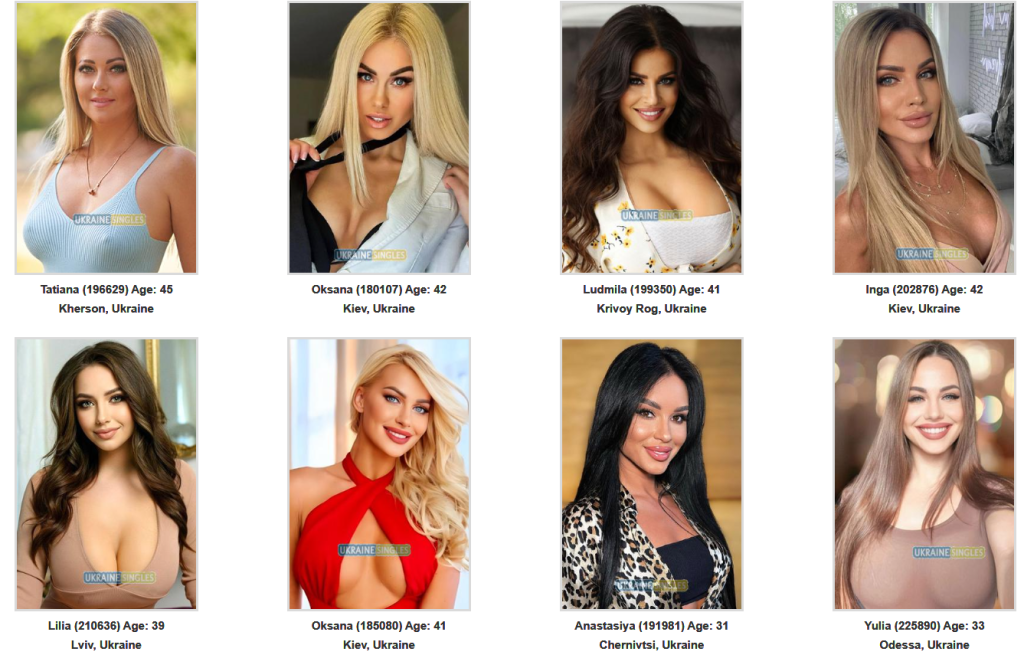
International dating sites make this especially easy to see because the filtering is so blunt. Country, age, height, education, religion, sometimes even hair color gets its own dropdown. People type in exactly what they think they want: a Ukrainian woman, an Asian woman, someone younger, someone Western and financially secure.
I used to take these searches at face value too. Now I read them as clues rather than answers.
Somebody chasing “traditional” is frequently asking for warmth they haven’t been getting. Somebody who won’t stop mentioning financial stability has usually been broke, or scared of being broke, at some point that mattered.
The “no drama, please” line in a bio is almost never written by someone who’s naturally calm, it’s written by someone who just survived the opposite.
I’m not saying preferences are pointless. Everyone’s allowed to have a type. But I’ve watched too many people confuse the wrapping paper for the gift. A passport doesn’t come with a personality guarantee. A number doesn’t tell you how someone handles conflict.
A gorgeous photo has never once predicted whether two people will actually get along at 11pm on a Tuesday when nothing’s going right.
What Loneliness Does That People Don't Expect
Here’s something that surprised me early in this job: the loneliest users on these platforms are frequently not the isolated ones. Plenty have full lives, careers, kids, a group chat that never sleeps. Some have been married before, sometimes more than once.
Imagine a year, or three, of nobody asking how your day went in a way that meant it. Then a stranger on a dating app starts remembering your dentist appointment. Asks about your mother’s surgery. Notices your texts got shorter and asks if you’re okay.
Small on the page. Massive underneath it.
This is exactly why I’ve stopped rolling my eyes at people who fall fast online, the ones everyone else calls naive. I’ve read their message histories. What looks like an obvious red flag to an outside observer can feel, from the inside, like the first real attention someone’s gotten in years. And once attention starts feeling that valuable, people get remarkably skilled at explaining away the things that should worry them.
Meeting the Person You Invented Instead of the One Who Showed Up
If I had to name the single most predictable pattern in international dating, it’s this: people fall for an idea before they meet the actual human being attached to it.
They arrive already convinced of things. That Ukrainian women are one particular way. That Asian women behave a certain manner. That men from the West all want the same thing. That some culture, somewhere, produces uniquely loyal spouses.
Then the actual person shows up on a video call, and the story they’d already written doesn’t always survive contact with reality.
I’ve watched it happen so often it stopped surprising me. Expect someone to be naturally nurturing, and every caring text gets filed as proof, while the days they’re distracted or short with you get quietly ignored. Believe a certain background makes someone more loyal, and ordinary behavior starts reading as evidence, while anything that contradicts it gets waved off as “just an exception.”
The real risk isn’t only the stereotype itself, though I’ll say clearly that stereotyping an entire culture is never something I’d defend. The deeper risk is falling in love with your own expectations so completely that the real person, sitting right there, becomes invisible to you.
Why a Little Attention Goes Such a Long Way Now
We are more reachable than any generation before us, and somehow genuine attention feels harder to come by than ever. I’ve watched people rack up twenty messages before breakfast and still describe themselves as invisible.
That’s exactly why the small stuff carries so much weight. A partner who remembers a detail, asks a real question, makes you feel seen instead of just messaged, that’s not a nice extra. In a landscape this loud, it’s close to everything.
Trust Shows Up Where Nobody's Watching
I used to think trust was built in big moments. It’s not. It’s built in the forgettable ones.
Does this person actually do what they said they’d do? Do their stories still line up two weeks later? Can you ask an uncomfortable question without the whole conversation turning cold? Will they get on a video call without a new excuse every time?
The same contradiction resurfacing. Promises that never quite match the follow-through. Someone who’s dependable only when it happens to suit them.
After a decade of watching this unfold, I trust ordinary consistency more than any grand romantic gesture. “I love you” costs nothing to type at midnight. Showing up the same way for the fortieth time in a row is the part that actually means something.
When the Search for a Partner Starts Looking Like a Checkout Page
There’s something almost comic about watching human compatibility get sorted through tick-boxes.
- Height, selected.
- Age, selected.
- Country, selected.
- Education, selected.
- Even hair color earns its own menu.
Somewhere past page seven of the results, presumably, your future spouse is waiting, assuming you clicked the right combination.
Filters aren’t the problem by themselves, nobody has time to read three million profiles top to bottom. The trap is subtler than that. When another option is always one click away, you start treating people the way you’d treat items left in a cart, wondering if the next one might be a little taller, a little more successful, a little less complicated.
Eventually the search gets so frictionless that people forget real relationships were never built to run like an algorithm.
Actual humans arrive with messy histories, strange habits, bad days, complicated families, and opinions you won’t always share. In my experience, compatibility has very little to do with finding someone flawless. It’s finding out which flaws you’re actually able to live beside.
The One Request That Never Changes
Across every language, every culture, every platform I’ve ever tested, one thing has never once varied: people want to be chosen. Not liked. Not matched. Chosen.
They want to be remembered on a completely ordinary day. They want effort that wasn’t demanded of anyone. They want to be missed when they’re not around. That particular want doesn’t check anyone’s passport at the border.
If this job has taught me anything worth passing on, it’s that the closer you look at what makes people different, their language, their customs, their expectations of love, the harder it becomes to ignore how alike we all are underneath it.
We get lonely. We project onto people we’ve barely met. We hope harder than the evidence supports. We misread each other constantly. And every so often, we ignore a warning sign we really shouldn’t have ignored.
And then we log back in and try again anyway.
You’d think a decade inside this industry would leave me jaded about relationships. Honestly, in some ways it has, I trust big declarations far less than I used to, and I’m skeptical of most platforms’ promises by default. But it’s also left me strangely hopeful about why people keep showing up at all. Strip away the algorithms, the assumptions, the awkward first messages, the endless filters, and it comes down to something almost embarrassingly simple.
We want to be known.
And if we’re lucky, we want them to stay.
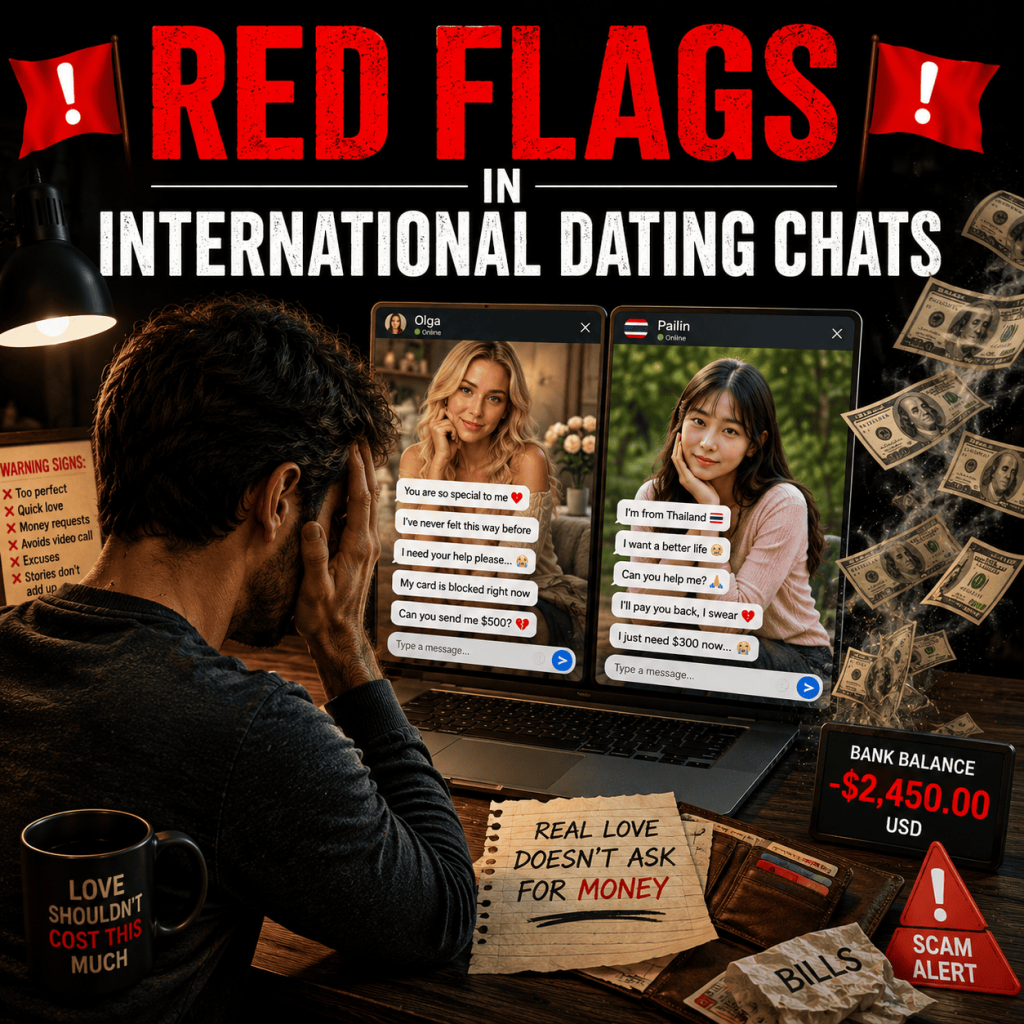
New Ebook: Red Flags in International Dating Chats